Download the Venmo app
Buy, sell, and transfer crypto on Venmo.
Explore the world of crypto right in the app. Get started with as little as $1.*
Crypto is volatile, so it can rise and fall in value quickly. Like all currencies, there's potential for gains and losses - so be sure to take it at a pace you're comfortable with.
Avoid crypto scams.
Scams targeting crypto are on the rise. Remain mindful when interacting or transacting online. Venmo will never ask for personal information such as passwords and security codes, or ask to send crypto on your behalf. Learn how to spot and avoid scams on the Venmo Help Center.
Get started with as little as $1.*
Your first crypto purchase doesn't have to be huge. You can even use your Venmo balance—so payback from yesterday's coffee becomes today's crypto purchase.
Manage your crypto in the app.
It’s easy to transfer your crypto into Venmo or buy new crypto, then track it all in the app. You can even toggle on price alerts for specific crypto types to get push notifications when the value changes by 5 or 10 percent in a day.

Transfer in a few taps.
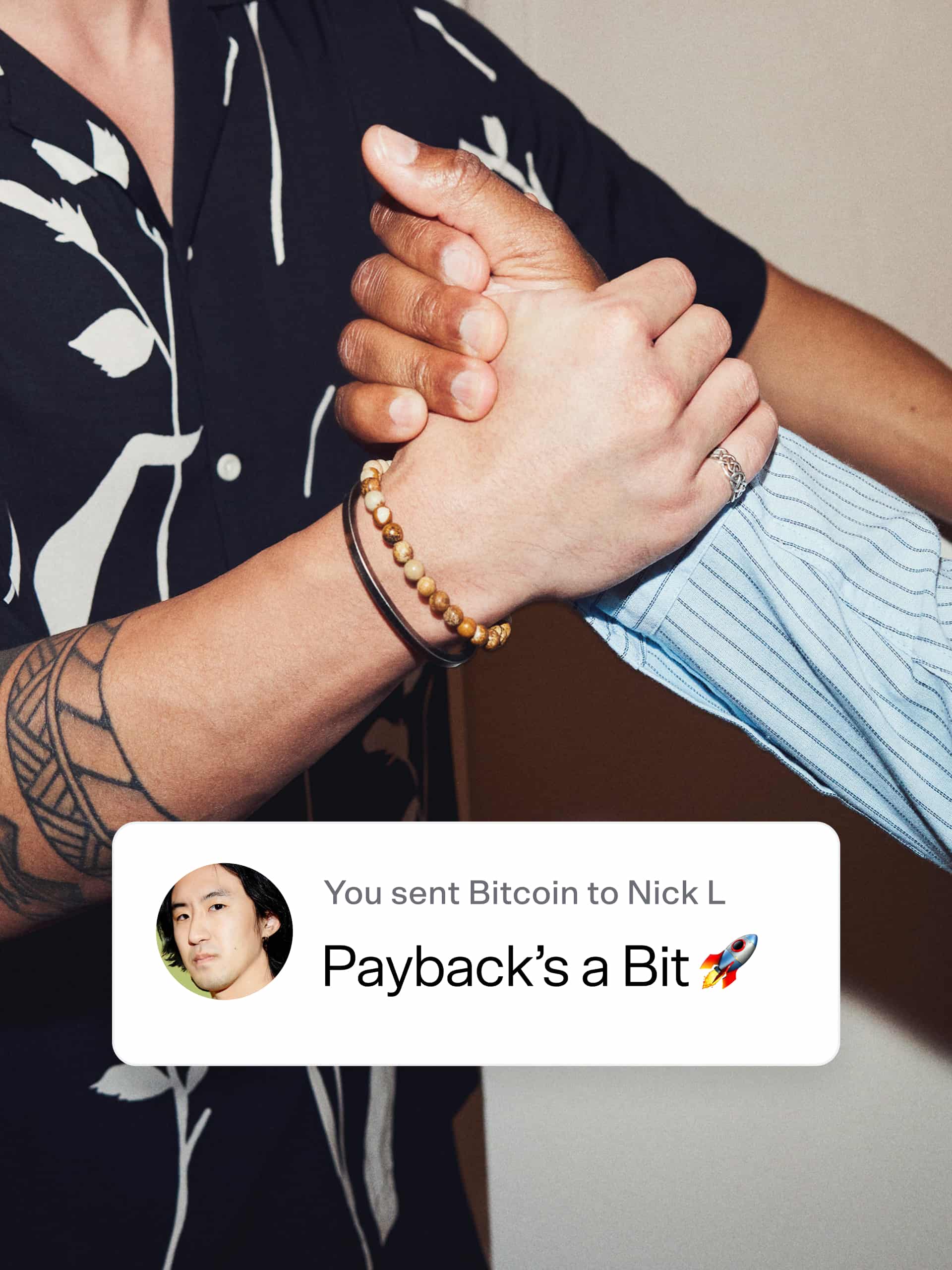
Feeling generous? Send any crypto you’re currently holding to a friend. Just make sure they’re set up to receive crypto first. Then send the whole amount, or a portion of it. You can also receive crypto from a friend—start by going through a few steps to get set up.
New to crypto? We can help.
Buy, hold, transfer, and sell crypto on the app you already know and love. We’ve got a library of in-app articles and videos to help you out along the way.
Earn cash back, turn it into crypto.
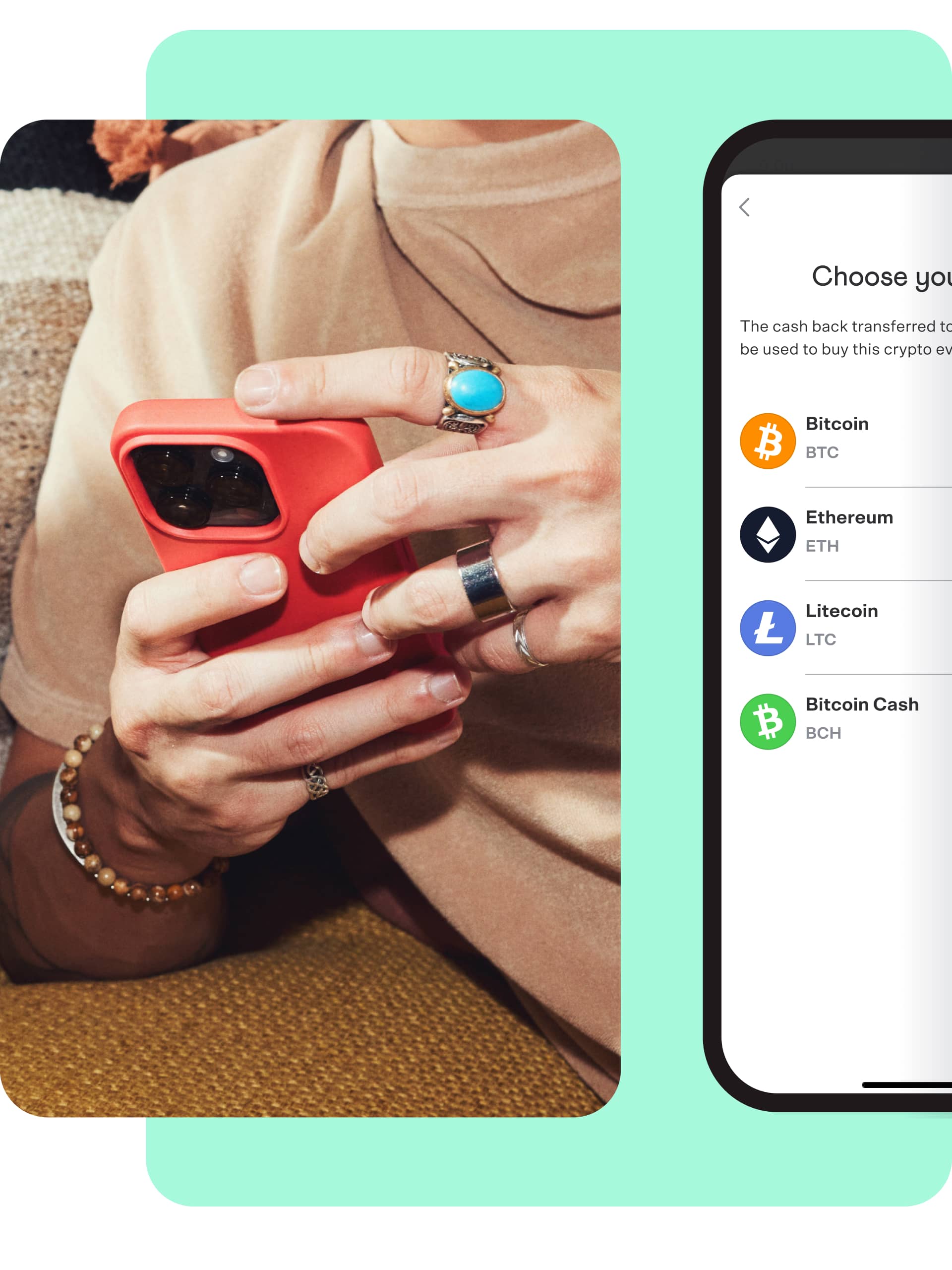
With the Venmo Credit Card, you can earn cash back on everyday spending, then auto-purchase crypto with that money.1 Simply enable it in the app, make your coin selection, and you'll automatically turn cash back into crypto—without a crypto purchase transaction fee.
Let's get started.
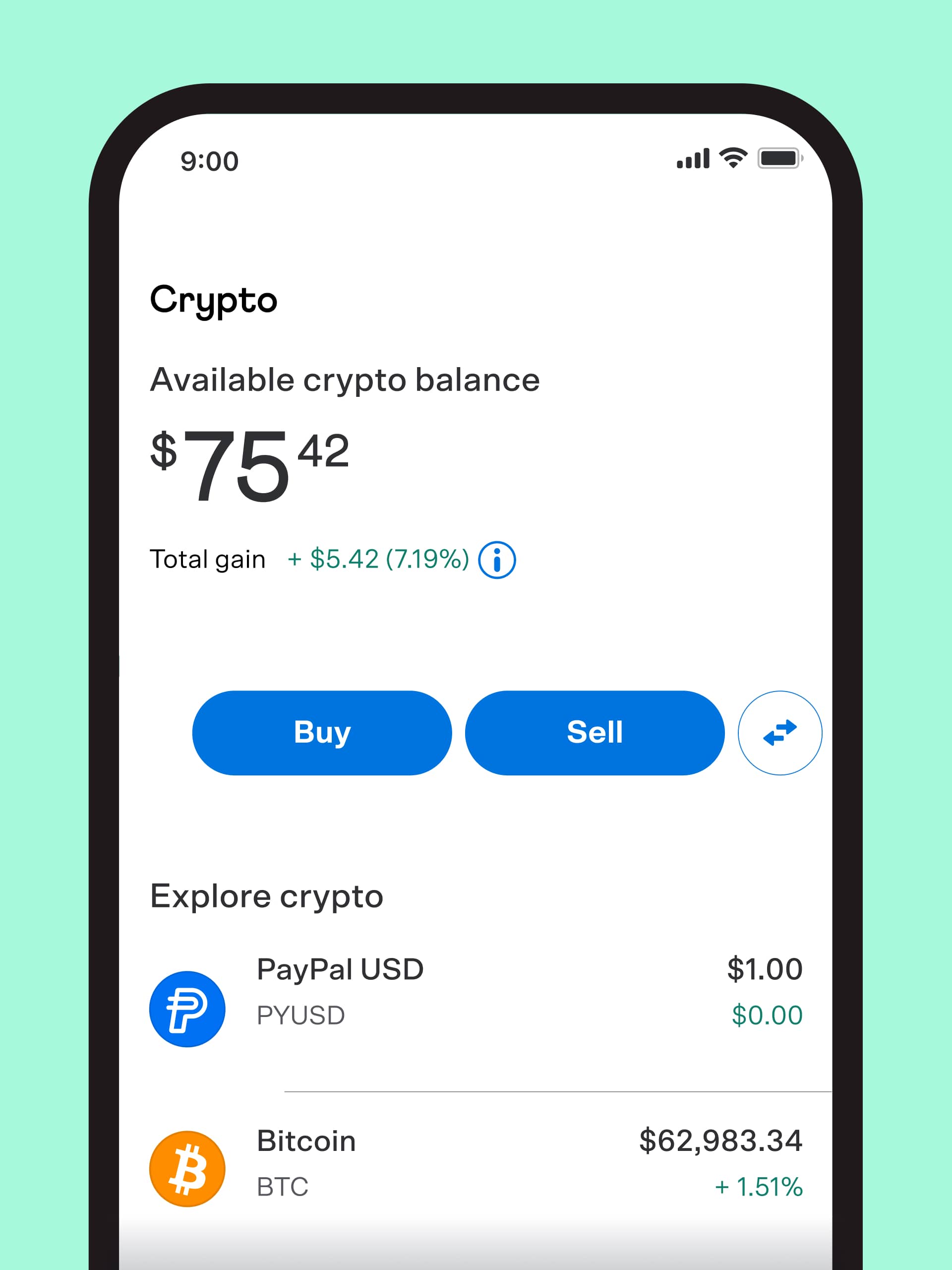
01
Open Venmo and tap Crypto from the bottom menu.
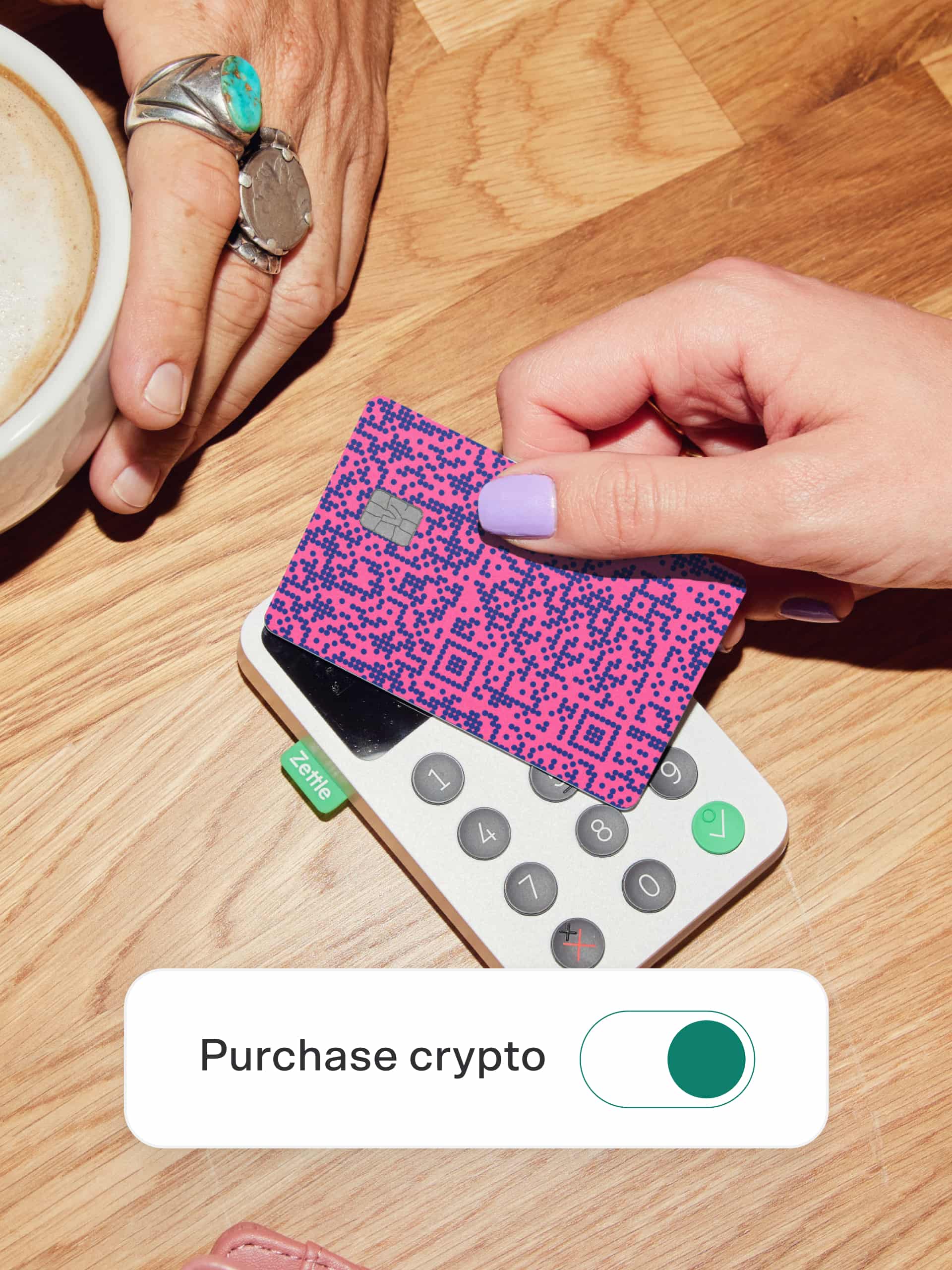
02
Make your first purchase for as little as $1. If you want, share it on your feed.
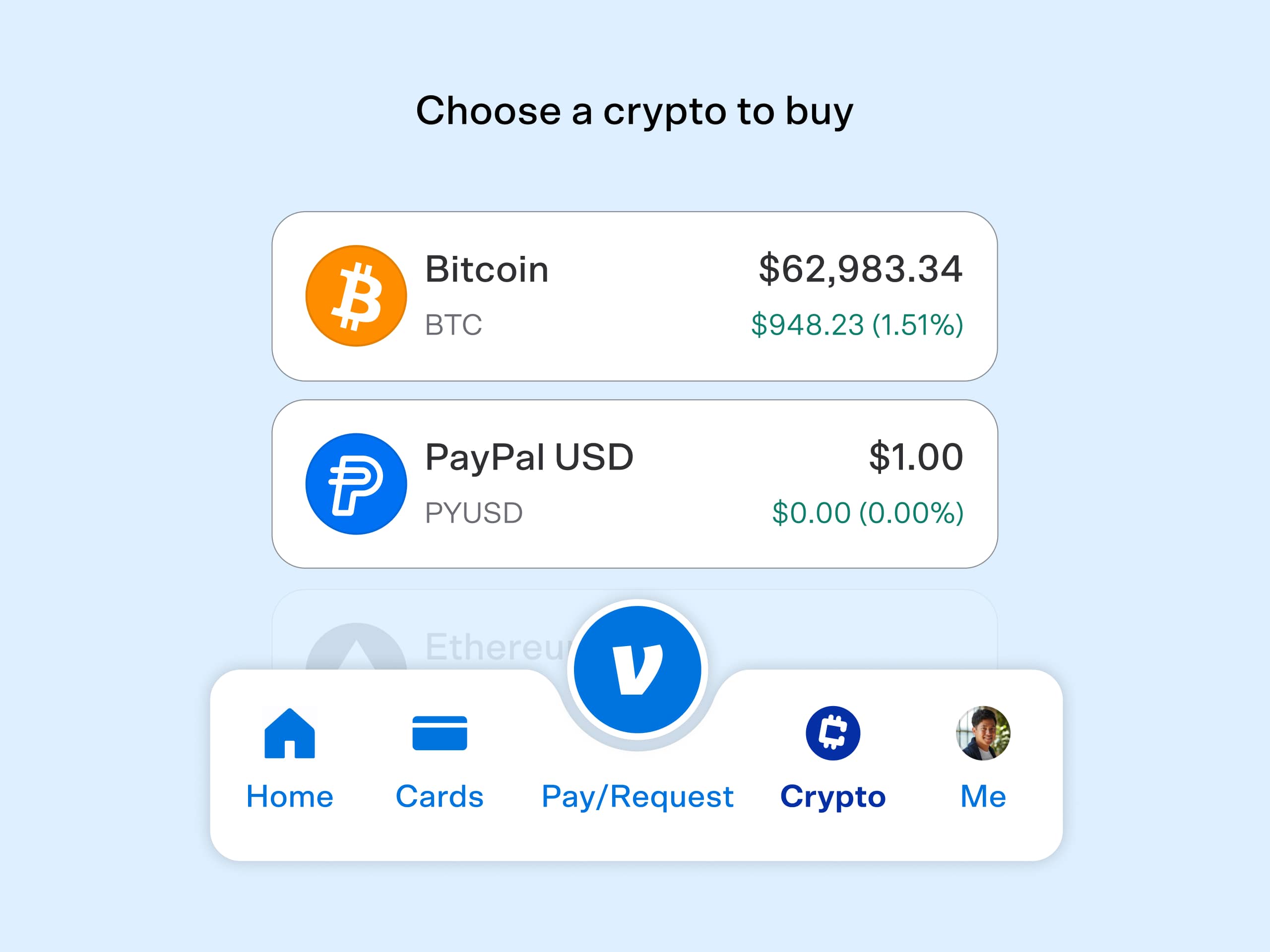
03
Keep tabs with price alerts, and easily sell, buy, or transfer crypto in a few taps.
Prices shown are for illustrative purposes only. Crypto is volatile, so it can rise and fall in value quickly. Like all currencies, there's potential for gains and losses - so be sure to take it at a pace you're comfortable with.
Learn the basics.
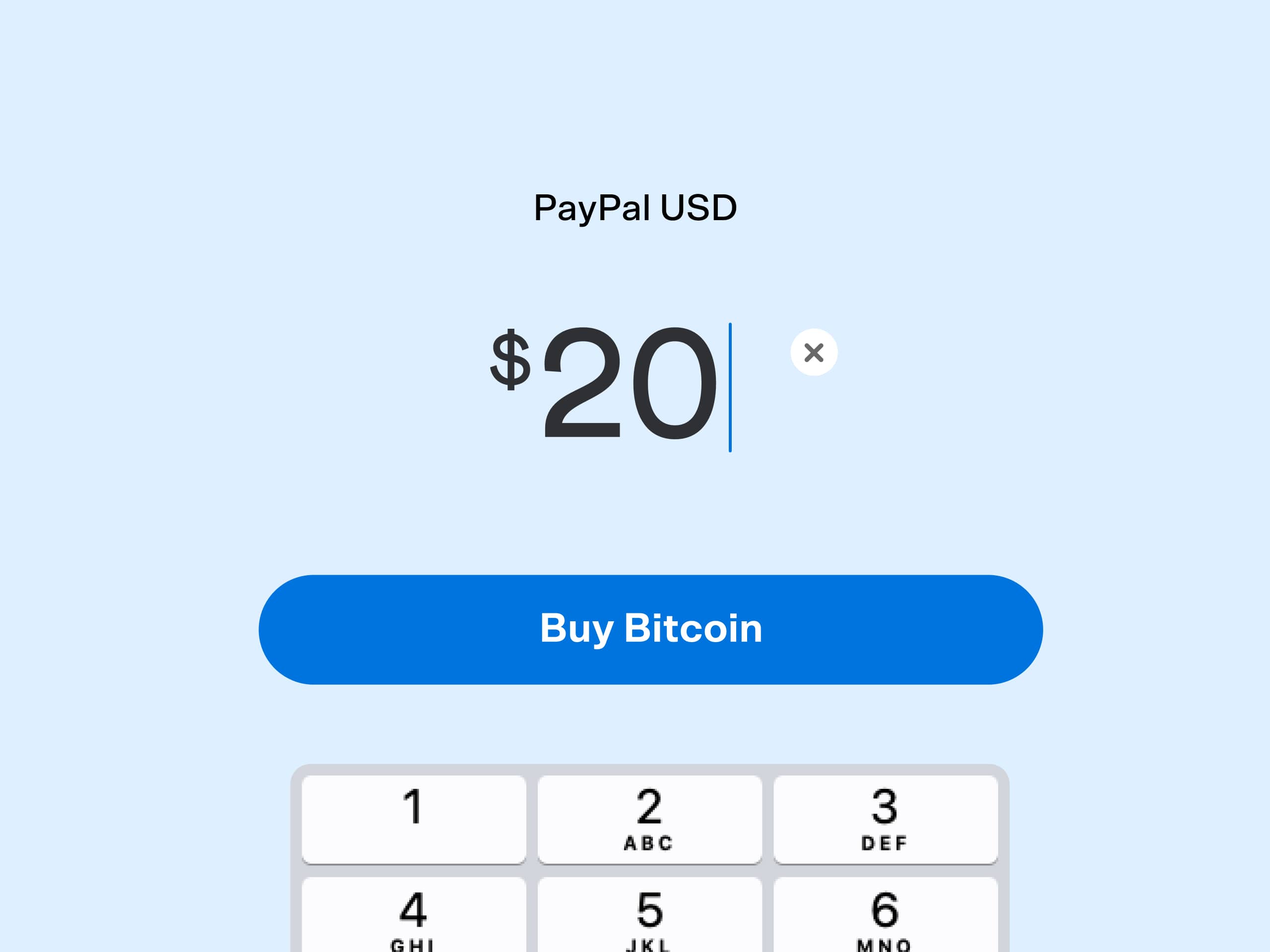
Transferring crypto on Venmo
How is crypto created
Exploring different cryptocurrencies

All about Bitcoin
It’s digital
- Crypto is completely digital. It exists in data files stored in many computers around the world.
- Crypto is unique because it makes it so certain data can’t be duplicated. For example, while you can easily copy and paste a file in your computer, you can’t copy and paste Bitcoin data to create new Bitcoin.
It’s like currency
- Because crypto data can’t be duplicated in this way, it can be used like currency to store and transfer value. If you own crypto, only you have access to it and only you can send it to someone else.
- Before crypto and blockchain technology, no one had figured out how to do this digitally without having someone in the middle keeping track of who owned what.
- Crypto allows people to use money online on a peer-to-peer basis, just like physical cash.
It’s powered by cryptography
- You might wonder why any of this is called ‘crypto’ in the first place. The reason is that cryptography plays a big role in how the underlying technology, blockchain, works.
- Cryptography refers to techniques that are used to encode information in secure ways. In blockchains, it allows people to prove ownership of their money and authorize spending—digitally.
- Cryptography also makes blockchains hard to corrupt or change, which helps keep people’s money safe.
It’s expanding
- Crypto curiosity has been growing rapidly due to the new possibilities the technology offers.
- Some people are excited by the new ways in which crypto lets you transfer value and interact with others online.
- While it’s still very early, some people believe in crypto because they think it may play a big role in how value is stored and transferred digitally in the future.
Crypto regulation is evolving
- Since crypto is so new and different, regulation around it is still evolving. In the U.S., agencies like the SEC and CFTC regulate different areas of the crypto industry.
- However, new rules are still being discussed and introduced as regulators become more familiar with crypto.
Get to know the crypto community’s special language and join the conversation.
Altcoin – Any of the thousands of cryptocurrencies developed after Bitcoin.
"I have a portfolio full of altcoins, but I don’t own any Bitcoin."
Crypto - Common abbreviation for cryptocurrency.
"The first crypto I bought was Bitcoin but now I own other crypto like Ethereum."
Decentralized – A system that runs simultaneously on multiple computers in multiple locations, rather than one central computer.
"The decentralized technology behind Bitcoin, called blockchain, runs simultaneously on thousands of computers around the world."
Fork – Changes to an existing crypto that can result in the creation of a new one.
"Bitcoin Cash forked off of Bitcoin and became its own cryptocurrency."
Halving – A built-in defense against inflation that occurs periodically to slow down the production of a cryptocurrency.
"Bitcoin and Litecoin have experienced a halving event just about every four years."
Hodl – Intentional misspelling of the word “hold,” refers to keeping crypto for a long time, regardless of market changes.
"My sister believes in Bitcoin so much that she’d hodl it even if it wasn’t worth anything."
Mining – Process for producing units of a cryptocurrency. Like mining for gold, but instead of pickaxes, crypto miners use powerful computers to solve difficult math problems.
"I’ve been mining Ethereum for a year and only have 2 ether. I think I need a better computer."
Volatility – How quickly and how much the value of crypto changes. Volatility can indicate risk.
"Bitcoin was really volatile yesterday. It went down $500 at breakfast and was up $750 by lunch."
Whale – Someone who owns a very large amount of crypto and can potentially affect the market through their decisions to buy, hold, and sell.
"Wonder how things will be after that whale in Switzerland bought a bunch of Bitcoin Cash."
What you own
- When you buy a stock, you buy a share of a company that’s regulated by the government. That share gives you ownership rights (and sometimes voting rights) in the company. The value of a stock is based on what people are willing to pay for it.
- When you buy crypto, you don’t own a piece of a company or a physical asset like gold. Instead, you get an entry in a digital database that says you own an amount of cryptocurrency. The value of that cryptocurrency is based on what people are willing to pay for it. (For cryptocurrencies like Ethereum, this value might be based on how frequently the coin is used to pay for apps.)
Price volatility
- Both stocks and crypto go up and down in price. However, compared to crypto, stock prices are much less volatile. Stock markets have been around for a long time, and people have developed a sense for how to value public companies.
- Since the crypto industry is still relatively new, people are unsure how to value cryptocurrencies. For example, much of Bitcoin’s value is uncertain because it depends on how useful it’ll become in the future. As a result, cryptocurrency prices can experience more dramatic swings than stocks.
Worldwide access
- Many people around the world don’t have access to developed stock markets.
- Since people can interact directly with cryptocurrencies with just an internet connection and a cryptocurrency wallet, many see them as an alternative way of storing value.
- Cryptocurrencies can transcend borders, but it’s always important to pay attention to local regulations regarding crypto.
Regulation
- Stock market regulations are much more established than crypto regulations. For example, stock markets in the U.S. are regulated by several central authorities, which deter fraud and oversee operations. These agencies have established rules with guidelines for how to enforce them.
- While crypto is overseen by regulators around the world, regulation in the space is still evolving.
Hours of operation
- If you want to trade stocks, you’re limited to trading only during official market trading hours. For example, regular hours for U.S. stock markets are during weekdays from 9:30 a.m. to 4:00 p.m. EST. Markets are closed on weekends and public holidays.
- The cryptocurrency market operates 24 hours a day, 365 days a year—which means you can buy or sell crypto at any time.
Get your bearings
- Ready to kick off your crypto learning journey? You’re in the right place.
- Plus, find more articles and videos about all things crypto in the app.
Crypto can be volatile
- The value of crypto can rise and fall, sometimes very quickly.
- It’s important to do your research, consider the risks associated with crypto, and learn about the different types of crypto coins and tokens out there. Our articles and videos can help with that!
Go at your own pace
- It’s OK to start small and grow as you go. Buying, selling, and holding crypto on Venmo is simple, and you can get started with as little as $1.*
*Terms apply. When you buy or sell cryptocurrency, we will disclose an exchange rate and any fees you will be charged for that transaction. The exchange rate includes a spread that Venmo earns on each purchase and sale. Buying and selling cryptocurrency is subject to a number of risks and may result in significant losses. Venmo does not make any recommendations regarding buying or selling cryptocurrency. Consider seeking advice from your financial and tax advisor. Only available in the US and limited in certain states.
The value of your crypto is based on the current exchange rate of each crypto you own, as well as how much of it you have. The exchange rate is determined by the market—specifically the price at which people are buying and selling each crypto.
How does my crypto compare to other types of currency?
- For starters, your crypto is totally digital, which means you won’t be dealing with paper bills. Instead, you’ll need an internet connection and a crypto account.
- It’s also not issued by a single government. Instead of a central bank, computer programs determine how crypto is issued and distributed. This means that you can’t pay for your taxes with crypto in most countries, since it isn’t official money.
- Because crypto is still so new, most merchants do not currently accept payments in crypto directly, unlike regular currency. If you go shopping, you may find that the stores you shop at don’t take crypto.
- Crypto prices can be very volatile, meaning they can quickly change by significant amounts. This happens because they’re determined by the prices at which people are buying and selling crypto in the market. Since crypto is so new, views on what different cryptocurrencies are worth can change quickly, causing market prices to vary in response. While this means that crypto can quickly gain in value, it also means that it can quickly lose it.
Where can I keep track of my crypto?
- You can buy, sell, and hold crypto on Venmo, and keep track of everything right in the app. Sales go straight to your balance, so you can manage your money the way you’re used to.
*Terms apply. When you buy or sell cryptocurrency, we will disclose an exchange rate and any fees you will be charged for that transaction. The exchange rate includes a spread that Venmo earns on each purchase and sale. Buying and selling cryptocurrency is subject to a number of risks and may result in significant losses. Venmo does not make any recommendations regarding buying or selling cryptocurrency. Consider seeking advice from your financial and tax advisor. Only available in the US and limited in certain states.
Blockchain is a digital record-keeping system that’s run by a network of computers around the world. Think of it like a book that’s designed to keep a running record of every crypto transaction that’s ever been made on that blockchain.
These records are shared and stored in computers on the blockchain network at all times. This makes blockchains hard to hack, because there’s no single point of weakness in their security systems.
The first and most famous example of this technology is the Bitcoin blockchain, which keeps a digital record of every time someone sends or receives Bitcoins (BTC).
How does blockchain work?
- People around the world, called “miners,” connect their powerful computers to the blockchain network to record crypto transactions into “blocks.”
- Each block stores a set of crypto transactions made in the blockchain at a particular point in time.
- Each time a new block is created, it’s added to the ongoing record, and a fixed amount of the blockchain’s cryptocurrency is generated. The miner who has successfully created the new block is rewarded with that cryptocurrency. This process is called “mining.”
Crypto prices can be very volatile. They can go up or down very quickly in a short amount of time. This means you can make money if your crypto’s value goes up, but you also risk losing money if it goes down.
Crypto is still new
- Crypto as a technology and an ecosystem is new and evolving. Many people are still unfamiliar with what crypto is and what it may be worth.
- Other assets, like stocks or even gold, have been around for a long time and have well established uses. People have a good sense of what these traditional assets are worth.
- It’s not fully clear how crypto will be used in the future—or what its value will be in the long run— making it hard to value in the present.
- Crypto technology is promising and has the potential to change how we think about and use money online. However, it’s still unclear which projects will fulfil that potential, and which won’t. Because of this, even minor successes or failures can have major effects on crypto prices.
It’s a small (but growing) market
- Although cryptocurrencies are growing in popularity, they’re still only owned by a minority of the population. They’re also not yet widely accepted by merchants to pay for goods directly.
- Because cryptocurrency markets are small, even small sums of money coming in and out of the market can have bigger effects on prices than they would in, say, the stock market.
- If crypto becomes more widely used and accepted, prices are also likely to become more stable.
We don’t provide tax advice, so we’ll only give you some highlights you need to know. Consult your tax advisor when buying and selling crypto.
How does the IRS views crypto?
- Cryptocurrency is treated differently than regular cash for federal tax purposes. The Internal Revenue Service (IRS) classifies crypto as property.
- That means crypto is treated similarly to stocks and other investments when it comes to taxes. As a result, whenever you sell your crypto or use it as payment, you’ll have to report any gains or losses to the IRS.
How do I report gains and losses?
- Reporting gains and/or losses means you need to let the IRS know if you made or lost money when you sold crypto.
- To figure this out, you need to find the difference between the cost you bought the crypto for versus the price you sold it for. If the sale price was higher than the purchase price, you incurred a gain. If the sale price was lower than the purchase price, you incurred a loss. Either way, you need to report this gain or loss on your taxes.
Will I receive tax documents?
- To help you calculate your gains or losses, we’ll send you a yearly transaction history with all your crypto transactions and a gains and losses statement.
It's possible to start buying cryptocurrency like Bitcoin or Ethereum with as little as $1 directly in the Venmo app. To get started:
- Tap Crypto in the bottom navigation bar.
- Tap "Buy" and select the type of coin you'd like to purchase.
- Enter the desired purchase amount.
- Review your transaction and confirm your purchase.
Venmo charges a transaction fee when you buy or sell cryptocurrency. This fee is a variable percentage depending on the transaction amount. All fees are always displayed for your review before you complete any transaction, ensuring full transparency. You can learn more about our crypto fees here.
Yes, it is possible to send cryptocurrencies like Bitcoin or Ethereum to other eligible friends on Venmo.
- Tap Crypto in the bottom navigation bar.
- Select the type of crypto you want to transfer and your desired recipient. You may have to verify your identity before proceeding.
- Enter the amount you want to transfer.
- Review and confirm your transfer. Your recipient will need to have their Venmo account set up in order to receive crypto transfers.
To sell cryptocurrency that you currently hold in your Venmo account:
- Tap Crypto in the bottom navigation bar
- Tap "Sell" and select the cryptocurrency you wish to sell.
- Enter the desired sell amount.
- Review your transaction and confirm the sale.
Once processed, the proceeds from the sale will be added to your Venmo balance.

Ready to crypto?
Open your Venmo app to start exploring and buy your first crypto for as little as $1.*
Scan to download the Venmo app
